At its core, Tower Rush is built around a straightforward game loop. You enter a round, follow the visual flow, make your moves according to the available game logic, and see how the round develops. It is designed to feel easy to follow at the surface, even if mastering the pace and getting comfortable with the rhythm takes a bit more time.
That is why beginners often warm up to it quickly. The format looks clean. The layout tends to be beginner-friendly. And the game concept does not need a long explanation just to get started.
That said, simple does not mean automatic. A clear format helps with access, not with certainty. People sometimes confuse those two things. Tower Rush can be easier to understand than many cluttered online games, sure, but every real-money decision still needs a calm head.
Why Tower Rush Attracts Indian Users
Indian players usually care about a few practical things first: mobile access, quick loading, simple onboarding, payment comfort, and whether a game feels usable in short sessions. Tower Rush fits that pattern well.
A lot of users are not sitting down at a PC for an hour. They are checking a site on Android, switching between apps, maybe using mobile data, maybe dealing with a smaller screen, maybe just wanting a few quick rounds. In that environment, Tower Rush makes sense because the format feels compact and direct.
Here is the broad appeal in one view:
| Feature | Why It Matters for Indian Users |
| Fast round structure | Works well for short play sessions |
| Clear visual layout | Easier for first-time users |
| Mobile-friendly format | Better suited to Android and browser access |
| Simple onboarding potential | Less friction before first use |
| Demo interest | Useful for checking pace and interface |
| Bonus and promo visibility | Helps users compare value before joining |
It is not magic. It is just a format that matches how many users actually browse and play.
Tower Rush Demo
Why Players Look for a Demo Version
Before real play, many users want to test the waters. Fair enough. A demo version is often the first thing they look for, especially if they are not interested in registering or depositing right away.
The appeal of a Tower Rush demo is obvious. You get a chance to inspect the layout, understand the pace, and see whether the interface feels comfortable on your device. That matters even more on mobile, where screen size and button placement can make or break the experience.
People also use demo access for a more basic reason: they do not want surprises later. They want to know what the game looks like, how rounds move, whether it feels too rushed, whether the visual logic makes sense. Honestly, that is smart.
What a Demo Can Show Before Real Play
A demo can help with familiarity. It can show:
- the general interface
- how the round flow looks
- how fast the game moves
- whether the design feels intuitive
- whether mobile navigation is comfortable
What it cannot do is remove uncertainty from real play. That point matters. A demo is useful for orientation, not prediction. It helps you understand the environment. It does not guarantee the same feeling once real stakes enter the picture.
Some platforms may offer demo access openly. Others may limit it, tie it to platform support, or place it behind account access. So when users search for Tower Rush demo, what they often really mean is this: Can I explore the game first without committing money?
Sometimes yes. Sometimes partly. Depends on the platform.
| Demo Question | Practical Answer |
| Can it help me learn the interface? | Yes, that is one of the main uses |
| Can it show the game pace? | Usually yes |
| Can it replace real-play experience? | No |
| Is it always available? | Not always, depends on the platform |
| Is it useful for mobile users? | Very much so |
Tower Rush Game Rules
How the Game Works Step by Step
Tower Rush is usually understood best when explained in plain language, not dressed up in technical nonsense. The basic flow tends to look like this:
- You enter the game and access a round.
- The interface presents the playable structure in a visual way.
- You follow the progression of the round and make your gameplay choices according to the available options.
- The round resolves.
- A new round begins, often quickly.
That quick reset is a major part of the game’s identity. It is meant to keep momentum going. For some users that feels exciting. For others, maybe a bit too fast at first. Which is exactly why demo access, when available, can help.
Basic Gameplay Logic and Round Flow
The logic of Tower Rush is less about reading dense rules and more about understanding rhythm. The game usually leans on repeatable round structure. Once you catch that structure, the interface starts feeling natural.
Think of it like this: the visual side teaches you almost as much as the written rules do. You are not just reading instructions. You are watching the pattern happen.
A simple comparison helps:
| Gameplay Element | What It Means for the Player |
| Round-based flow | Each session is broken into quick playable cycles |
| Visual progression | Easier to follow actions on small screens |
| Fast reset between rounds | Less waiting, more immediate continuity |
| Simple core mechanics | Good for new users |
| Repetition of structure | Helps players learn the format faster |
There is a reason games like this catch attention. The feedback loop is quick. You are not stuck in setup mode forever.
What New Players Should Understand First
New players should get three things straight from the beginning.
First, Tower Rush is easy to enter, but that does not mean you should rush your first real session. The interface may feel simple, but simple games can still tempt people into moving too quickly.
Second, the rules matter most when they are understood in context. You do not need to memorise every detail at once. You need to understand the basic flow, what each round asks of you, and how the interface behaves on your device.
Third, familiarity is not control. That is where some users get carried away.
So the sensible path is boring, maybe, but good:
start with observation, use demo access if available, check account and payment details before acting, and keep expectations grounded.
Bonuses for Tower Rush

Welcome Bonus Context
Bonuses always grab attention first. That is just reality. Many Indian users check the bonus section before they even decide whether registration is worth the effort.
With Tower Rush, bonus interest usually revolves around welcome offers, first-access promotions, and general new-user value. Sometimes there may be a broader platform offer that includes the game rather than a game-specific reward. That distinction matters. A Tower Rush bonus is not always a standalone thing. It may be part of the wider site offer.
So it helps to think in categories instead of assumptions.
| Bonus Type | What Users Should Know |
| Welcome bonus | Often aimed at new account holders |
| First deposit offer | May apply after funding the account |
| Promo code activation | Sometimes required, sometimes not |
| General platform promotion | May include Tower Rush among other games |
| Limited-time offer | Worth checking before registration or deposit |
Bonus Terms and Practical Expectations
This is the part people skip, then complain later.
Bonus value is never just about the headline. It is about conditions, timing, eligibility, and where the offer actually applies. Some bonuses require registration first. Some need a deposit. Some may need a promo code entered during sign-up or in the cashier section. Some might not be active for every user or every region. And some are promoted loudly while the useful detail is tucked away in small print. Classic.
So yes, bonus information matters, but realistic reading matters more.
A good rule: treat every offer as a practical extra, not a reason by itself to join. Bonuses can improve first access. They should not replace common sense.
Tower Rush Mobile App
Mobile Browser Experience
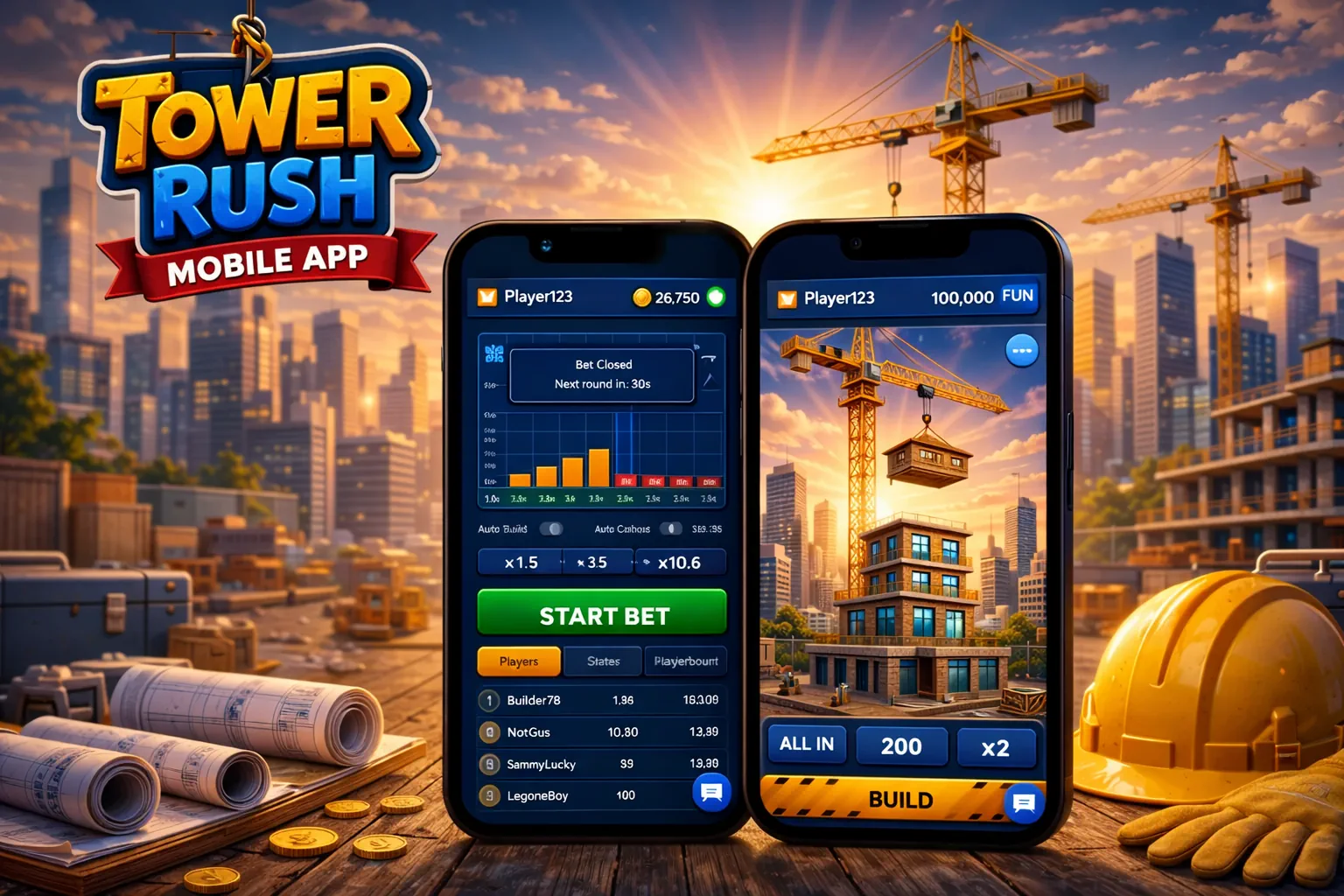
For Indian users, mobile browser access is often the real main platform even when an app is mentioned everywhere. A lot of people simply open the site in Chrome or another mobile browser and use the game that way. And honestly, if the site is well optimised, that may be enough.
The mobile browser version matters because it is instant. No extra install. No storage issue. No update problem. You visit, log in, check the interface, and go.
That is a strong fit for Tower Rush because the game is built around speed and clear screen flow. If the platform handles responsive design properly, mobile browser play can feel smooth and natural.
App Access and Small-Screen Usability
Some users still prefer an app. Fair. An app can feel more direct, more stable, more native on the phone. But not every platform offers a dedicated Tower Rush app, and not every user needs one.
The better question is not “Is there always an app?” but “Does the game work properly on my phone?”
That includes:
- readable layout
- tap-friendly controls
- clean loading on mobile data
- easy login
- visible account section
- simple deposit and withdrawal navigation
| Mobile Access Option | Strength |
| Mobile browser | Quick access without installation |
| App version | Can feel more direct for frequent users |
| Android-friendly layout | Important for the Indian market |
| Responsive interface | Helps with small-screen clarity |
| Fast loading design | Better for short play sessions |
If the mobile experience is bad, everything else becomes annoying fast. Tower Rush benefits from keeping that front and centre.
Tower Rush Registration
How to Sign Up
Registration should be short. If it turns into a chore, users bounce.
Most Tower Rush registration flows are straightforward on platforms that support the game. You open the sign-up page, enter the standard account details, confirm the required information, and create your account. After that, depending on the platform, you may need to verify certain details before using the full account features.
The important thing for new users is not speed alone. It is clarity.
A good registration flow should make these steps obvious:
account creation, login, account confirmation, and first access. Those are related, but they are not the same thing.
Login and First Account Access
After registration, the next stage is first login and account familiarisation. This is the moment where many users either feel comfortable or get irritated. You do not want to be hunting around the site trying to figure out where the game section is, where the payment area is, or whether a promo code field exists.
A sensible first-access checklist looks like this:
- Log into the new account.
- Check whether profile details are complete.
- Visit the Tower Rush section.
- See whether demo access is available.
- Review any active welcome offer or promo field.
- Look at payment options before depositing.
That order works well because it keeps the user informed instead of reactive.
Tower Rush Deposit and Withdrawal Methods
Deposit Preparation
Before making any deposit, users usually want the basics: what the payment flow looks like, how simple the cashier section is, whether INR support is clear, and whether the site explains the process cleanly.
That is exactly how it should be. Payment readiness is part of onboarding, not some separate advanced topic.
For Indian users, the best payment experience is usually one that feels familiar, visible, and easy to confirm before money moves. Since exact methods can vary by platform, the smart approach is to verify what is currently listed inside the payment section rather than assume.
Here is a general user-focused breakdown:
| Payment Area | What to Check First |
| Currency display | Look for INR support or clear conversion information |
| Deposit page | Check the available methods shown on the platform |
| Minimum amounts | Review before funding the account |
| Processing visibility | See whether the platform explains timing |
| Account verification | Confirm whether extra checks may affect payments |
Withdrawal Flow and User Expectations
Withdrawal questions come early now, and rightly so. Users do not want to discover payment rules only after they have already started using the platform.
The usual expectation is simple: once the account is active and any required checks are complete, users should be able to submit a withdrawal request through the cashier or wallet section. What matters then is transparency. Is the process explained clearly? Are account details consistent? Are there stated review or processing stages?
That sort of thing.
The best move for Indian users is to read the withdrawal section before the first deposit, not after. It sounds obvious, but a lot of people skip it.
Tower Rush Promo Codes
Where Promo Codes Usually Apply
Promo codes are one of the most searched parts of any homepage in this space. No surprise there. Users want to know whether a code exists, where it goes, and whether it gives them anything useful.
On Tower Rush platforms, promo codes may appear during:
- registration
- first deposit
- bonus activation
- account offers inside the promo section
Sometimes the field appears during sign-up. Sometimes later in the cashier or promotions tab. Sometimes there is no code needed at all because the offer is automatic. So users should not assume that “no code box” means “no offer.”
How Indian Users Typically Check Promo Offers
Most Indian users do this in a very practical order:
- They check the homepage or promotions tab.
- They look for welcome language tied to new accounts.
- They see whether a promo code is mentioned.
- They check whether the code must be entered before deposit.
- They compare the offer with the actual terms.
That is the right approach. No drama. No chasing random code lists that may already be dead.
Why Tower Rush Appeals to Indian Players
Fast Format and Easy Entry
Tower Rush works for Indian audiences because it respects time. That sounds small, but it is not. A lot of users want games that feel immediate. They do not want ten layers of explanation before they can even judge whether the game suits them.
Tower Rush gets attention because the format is fast, the concept is visible, and the barrier to understanding is low. People can make a quick first impression and decide whether to go further.
Mobile-First Convenience
This point keeps coming back because it should. In India, mobile usability is not some side feature. It is the main road.
When a game feels natural on mobile, users stay longer. When registration works cleanly on mobile, users trust the platform more. When payment navigation makes sense on a phone screen, friction drops. Tower Rush sits in that zone where mobile-first design is not just helpful. It is essential.
Responsible Play and Realistic Expectations
Let’s keep this plain.
Understanding Tower Rush does not remove uncertainty. Using a demo does not predict real outcomes. A welcome bonus does not transform the experience into something risk-free. And fast games, especially, can encourage impulsive decisions if the user is not paying attention.
So the healthiest way to approach Tower Rush is with practical limits and realistic expectations. Learn the interface first. Check the rules. Review payments before acting. Treat bonuses as extras. Do not force the pace just because the game is fast.
That mindset is better than hype every single time.
Frequently Asked Questions about Tower Rush
Can I access Tower Rush on Android or mobile browser?
Yes, mobile access is a major part of the Tower Rush appeal. Many users explore the game through mobile browser, and some platforms may also support app-style access. The key thing is how well the game performs on a small screen.
Is it possible to explore Tower Rush without depositing right away?
In some cases, yes. Demo availability may let users understand the interface and pacing before real play. That depends on platform support, so it is worth checking whether demo access is available before registration or deposit.
How do welcome bonuses relate to Tower Rush?
Welcome bonuses may apply directly to Tower Rush or more broadly to the platform that hosts it. Users should always check where the offer applies, whether a deposit is required, and whether any promo code must be entered.
What are the main steps after registration?
After registration, the usual steps are login, account review, checking available offers, exploring the Tower Rush section, and reviewing deposit and withdrawal information before funding the account.
How do Indian users usually check withdrawal information?
Most users go straight to the cashier, wallet, or payment section and review the withdrawal process before depositing. That is the smartest way to understand the flow, required account checks, and general expectations early.